The real monthly cost of a rental, in plain math
A listing shows the rent. It shows a mortgage estimate. The deal looks good.
Then the rest of the bill shows up.
I want to show you a simple way to read a rental before you fall for it. You need one subtraction, and you already know how.
The mortgage is only part of the bill
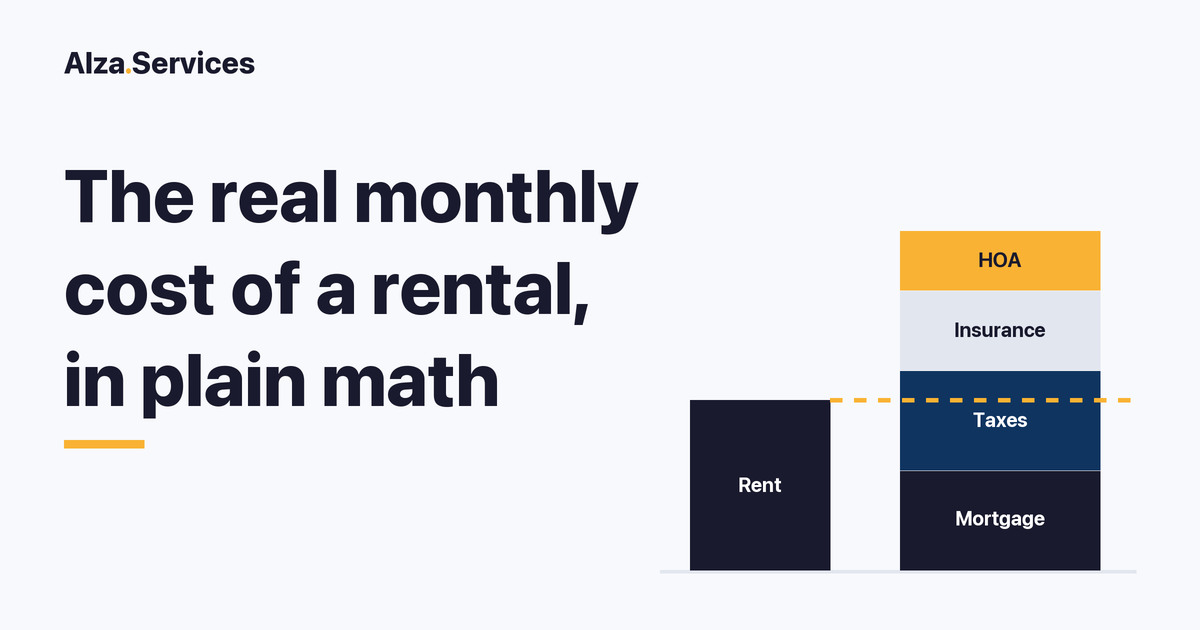
Here is what I tell people first. The mortgage is only part of the bill. Taxes, insurance and HOA come due every month whether the rent comes in or not.
Lenders have a name for this. They call it PITI: principal, interest, taxes and insurance (Chase, “What is PITI?”). When the home is in an HOA, they add an “A” for association dues and call it PITIA (DSLD Mortgage, “What is PITIA?”).
You don’t need the acronym. You need the four or five lines:
- Principal and interest on the loan
- Property taxes
- Insurance
- HOA dues, if the home has them
Add them up. That is your real monthly bill.
Why this matters more now
Taxes and insurance can change even when your loan rate is fixed. Both have been going up.
- Property taxes. The average single-family property tax bill was $4,427 in 2025, up about 3% (ATTOM, 2025 property tax analysis, released April 2026).
- Insurance. The average home insurance premium was $2,948 in 2025, up 12%. Insurify projects about 4% more for 2026 (Insurify, home insurance price projections).
Those are national averages. Your numbers will differ. The point is the direction. A rental that worked last year can stop working without anything else changing.
The plain-math test
Here is the test. Take the monthly rent. Subtract the full monthly bill. The answer is a plus or a minus.
This is how rental cash flow is usually figured: rent minus all the costs, including the loan (Motley Fool, rental cash flow, February 2023; BiggerPockets, real estate math).
Example only. These are round, made-up numbers, not a real property.
| Item | Per month |
|---|---|
| Expected rent | $2,000 |
| Mortgage estimate (principal and interest) | $1,400 |
| Property taxes | $350 |
| Insurance | $250 |
| HOA dues | $200 |
| Full monthly bill | $2,200 |
If you only look at the listing, the math seems fine: $2,000 rent minus $1,400 mortgage leaves $600.
Now use the full bill: $2,000 minus $2,200 is negative $200.
In hundreds, that is 20 minus 22. If you can do 20 minus 22, you can judge a rental. And you’ll know negative 2 is where you don’t want to be.
What a fuller check adds
The test above is the floor, not the whole picture. Some months the unit sits empty. Things break. Both come out of the rent too (RealWealth, rental cash flow).
So a small plus on paper can still be a minus in real life. Treat a thin margin with care.
Here is a simple habit. Run the plain-math test first. If the answer is already negative, you can move on in a minute. If it is a healthy plus, then look at vacancy and repairs. This order saves you from spending an evening on a deal that never worked.
Do this for every listing you look at, with the same lines each time. Using the same lines every time makes listings easy to compare side by side.
A good decision shouldn’t need a glossary
Cash-on-cash and DSCR are useful terms. But a good decision shouldn’t need a glossary. Show the rent. Show every cost. Let the person do the math they already know.
I believe that, and it is why I keep this test simple.
Where Alza fits
Doing this math for one listing is quick. Finding the listings worth checking is the slow part.
Alza sets up and runs a tool that checks new listings against your buy box, which is the list of what you want to buy. It is done for you and kept running. You spend your time on the math above, not on the search.
This is a way to read the numbers, not financial advice.
Next step
If you want to see what that would look like for your workflow, book a short call.